What Is a Fixed Resistor and How It Works in Circuits
You’ll notice fixed resistors everywhere once you start looking at electronic circuits. They quietly control how current and voltage behave so other parts can work safely and smoothly. In this guide, you’ll learn what a fixed resistor is, how it works, and why it’s used so often. You’ll also see the common types, symbols, and real circuit applications, along with simple tips for choosing the right one. By the end, you’ll have a clear picture of how fixed resistors fit into everyday electronics.Catalog
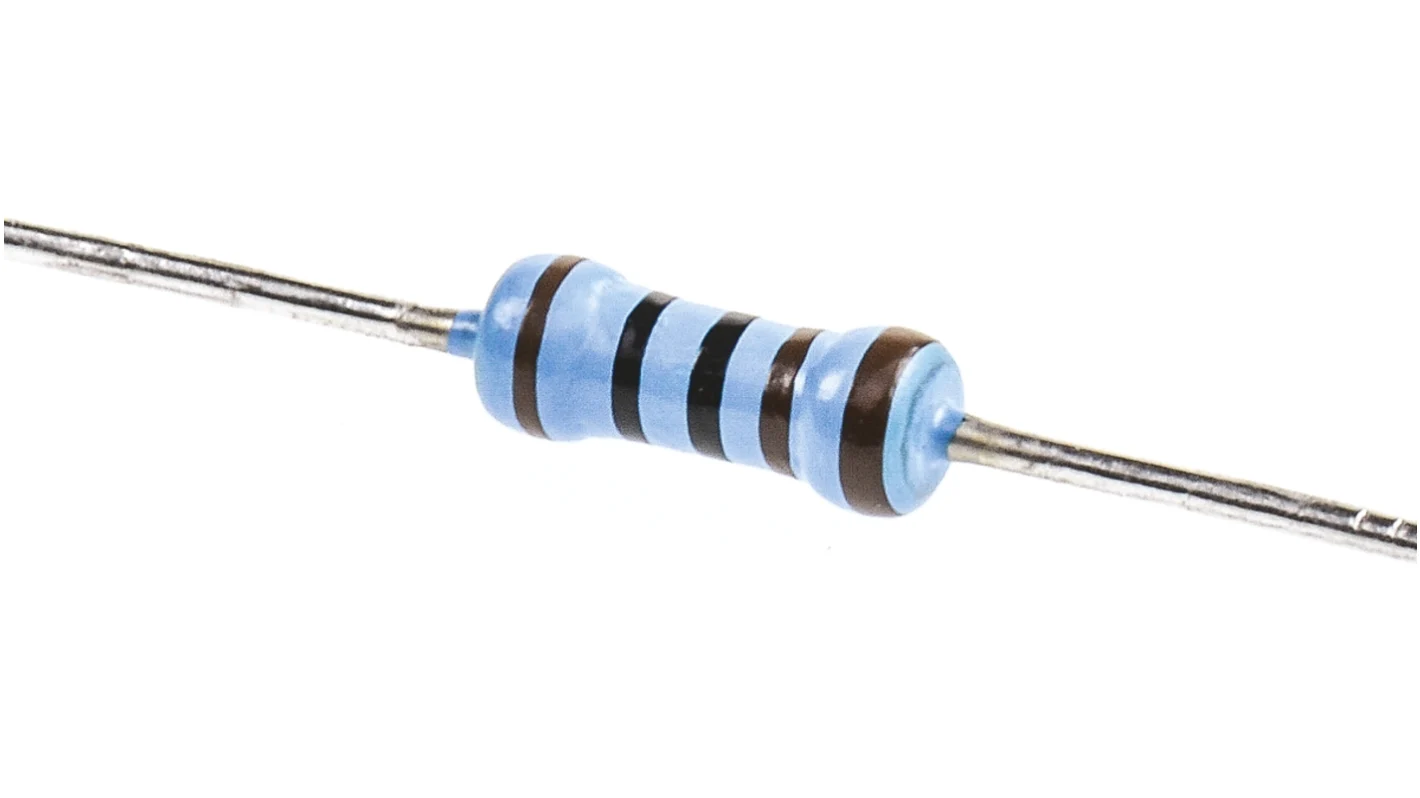
Figure 1. Fixed Resistor Component
What Is a Fixed Resistor
A fixed resistor is an electronic component that provides a constant, non-adjustable resistance value. Once manufactured, this resistance remains unchanged during normal operation and cannot be altered. The value, specified in ohms, is chosen to meet the electrical needs of a circuit.
What defines a fixed resistor is its stable and unchanging resistance, which allows it to perform a specific electrical role consistently over time. Because the resistance does not vary, the circuit’s behavior remains predictable and steady during operation.
Unlike adjustable resistors, a fixed resistor maintains the same resistance throughout its service life. This straightforward and dependable behavior makes fixed resistors a fundamental part of electronic circuits wherever a permanent resistance value is required.
How a Fixed Resistor Works
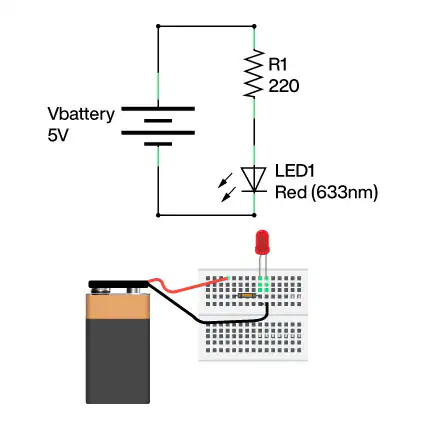
Figure 2. Fixed Resistor in a Simple Circuit
A fixed resistor works by opposing the flow of electric current in a circuit. When a voltage source, such as a battery, is connected, electric current naturally tries to flow through the circuit. The resistor slows this flow by providing resistance, which keeps the current at a safe and controlled level.
As current passes through the resistor, part of the electrical energy is used up inside the resistor, which results in a voltage drop across it. This means the voltage measured after the resistor is lower than the voltage before it. You can think of the resistor as creating an intentional reduction in voltage so that other components receive only what they can safely handle.
This behavior is especially important in simple circuits, such as those using LEDs. Without a resistor, too much current would flow, which could quickly damage the LED. By placing a fixed resistor in series, the current is limited, and the LED operates normally. In this way, the resistor controls both how much current flows and how voltage is shared within the circuit, ensuring stable and reliable operation.
Types of Fixed Resistors
Fixed resistors use different materials and constructions to meet varying needs for accuracy, power handling, and cost, which directly affects their performance in a circuit.
Carbon Film Resistors
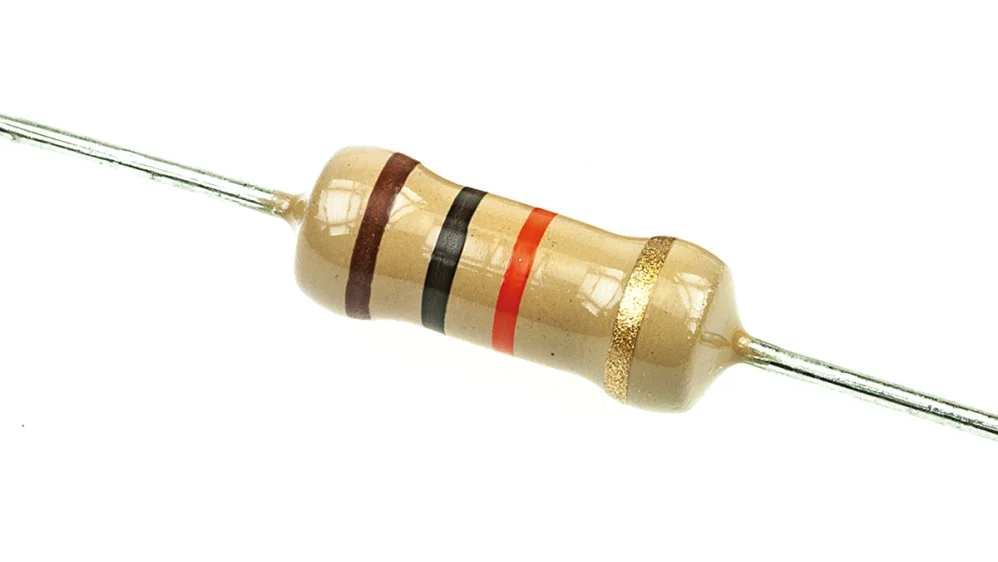
Figure 3. Carbon Film Resistor
Carbon film resistors are made by depositing a thin layer of carbon onto a ceramic base, with the resistance value set by trimming the carbon layer in a controlled pattern. This manufacturing process is simple and economical, which keeps production costs low.
In practical applications, carbon film resistors provide moderate accuracy and stability, making them suitable for general-purpose circuits. They are commonly used in basic electronic devices and learning projects where high precision is not required. Their affordability makes them a practical choice when cost is a primary concern.
Metal Film Resistors
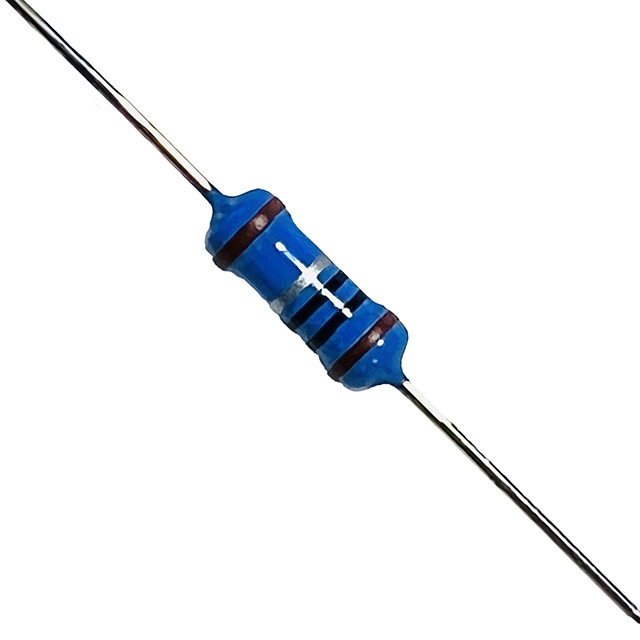
Figure 4. Metal Film Resistor
Metal film resistors use a thin metal layer applied to a ceramic core to form the resistive path. The resistance value is adjusted during manufacturing to achieve a precise and consistent result.
Compared to carbon film resistors, metal film resistors offer higher accuracy and better long-term stability. Their resistance changes less with temperature and aging, which makes them suitable for circuits that depend on consistent electrical behavior. These resistors are often used in measurement and signal-related applications where reliable performance is required.
Wirewound Resistors
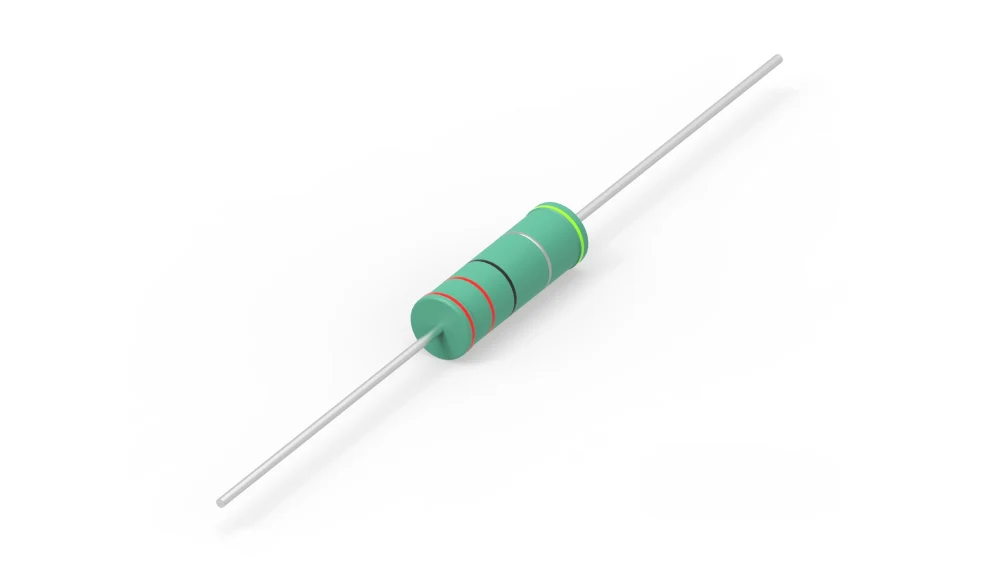
Figure 5. Wirewound Resistor
Wirewound resistors are constructed by winding metal wire around an insulated core, usually made of ceramic. The resistance value depends on the wire’s material, length, and thickness, which allows precise control during design.
This construction enables wirewound resistors to handle high power and current levels without damage. As a tradeoff, they are generally larger than film-based resistors and may not perform well in high-frequency circuits. They are typically used in power-related applications where durability and heat handling are more important than compact size.
Surface Mount Resistors
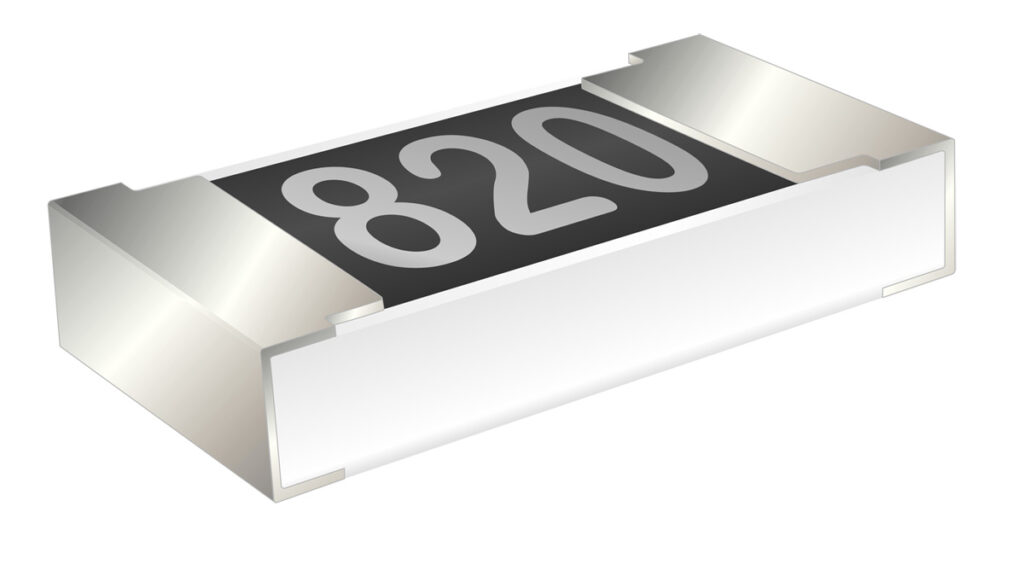
Figure 6. Surface Mount Resistor
Surface mount resistors are designed to be mounted directly onto the surface of a circuit board rather than using wire leads. They are manufactured using film-based techniques and are available in very small sizes.
Their compact form supports high-density circuit designs and efficient automated assembly, which makes them common in modern electronic products. Surface mount resistors are widely used in compact and portable devices, where space efficiency and large-scale manufacturing are key considerations.
Fixed Resistor Symbols
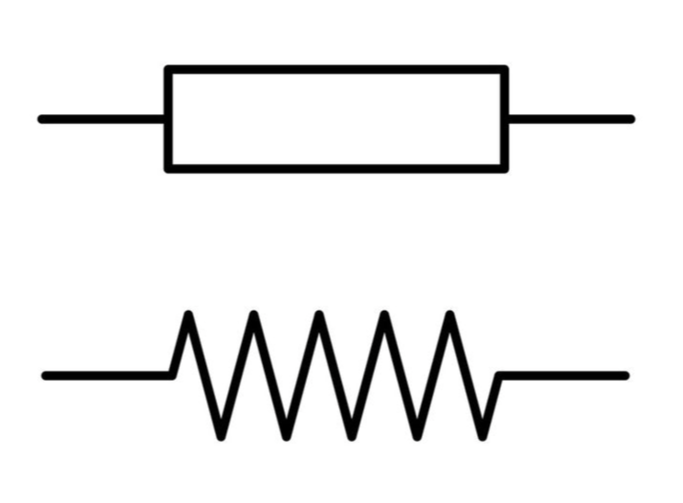
Figure 7. Fixed Resistor Schematic Symbols
In circuit diagrams, fixed resistors are represented using standard schematic symbols instead of drawings that show their physical appearance. These symbols provide a simple and consistent way to indicate where a resistor is placed and how it connects within a circuit.
Two symbol styles are widely recognized. The rectangular symbol follows the IEC standard and is commonly used in international and academic schematics, while the zigzag symbol follows the ANSI standard and is often seen in American and older circuit diagrams. Despite the difference in shape, both symbols refer to the same fixed resistor component.
Fixed Resistor Applications
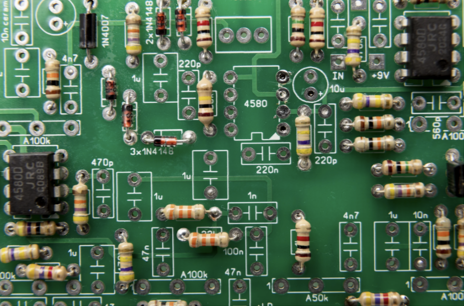
Figure 8. Fixed Resistors on a Circuit Board
Fixed resistors are used in electronic circuits to manage current flow and voltage levels, allowing components to operate within safe and intended limits. Their fixed resistance value enables consistent behavior across a wide range of circuit designs.
One common application is current limiting, where a fixed resistor restricts the amount of current flowing through a component. This is particularly important for parts that can be damaged by excess current, helping maintain stable and reliable operation.
Fixed resistors are also used in voltage division to reduce a higher voltage to a lower level needed by specific sections of a circuit. In signal paths, they assist with signal control by adjusting signal levels and maintaining balance. They also support circuit protection by reducing electrical stress caused by sudden changes in current, helping protect sensitive components during normal operation.
How to Choose a Fixed Resistor
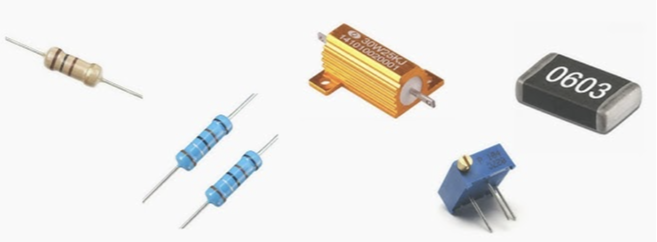
Figure 9. Common Fixed Resistor Types and Packages
Choosing a fixed resistor begins with selecting the resistance value, which determines how the resistor influences current or voltage within a circuit. This value should align with the circuit’s intended electrical behavior so the resistor performs its function as expected.
The power rating defines how much heat the resistor can safely dissipate during operation. Selecting a resistor with sufficient power handling helps prevent overheating and supports stable performance over time.
Tolerance describes how closely the actual resistance matches its stated value. Circuits that rely on consistent electrical behavior benefit from tighter tolerance, while less sensitive designs can operate with wider limits.
Application requirements also play a role in selection. Factors such as physical size, operating conditions, and circuit layout influence which resistor type is most suitable. Considering these aspects together helps ensure the fixed resistor fits the circuit and operates reliably.
Advantages and Limitations of Fixed Resistors
| Advantages | Limitations |
| Simple construction makes fixed resistors easy to manufacture and use in most circuits | The resistance value cannot be adjusted once the resistor is installed |
| Low production cost helps reduce the overall cost of electronic designs | Any change in required resistance means the component must be replaced |
| Provides stable and predictable resistance under normal operating conditions | Resistance value can shift when exposed to high temperatures |
| No moving parts, which improves long-term reliability and durability | Excess power dissipation can lead to overheating and failure |
| Available in a wide range of resistance values and power ratings | Limited tolerance options can restrict accuracy in sensitive circuits |
| Easy to integrate into both simple and complex circuit designs | Not suitable for applications that require fine tuning or calibration |
| Consistent performance over time when operated within ratings | Performance depends on material properties such as thermal stability |
| Offered in compact sizes for space-limited designs | Environmental factors like humidity can affect some resistor types |
| Well suited for automated assembly and mass production | Physical size may increase when higher power handling is required |
| Straightforward replacement during maintenance or repair | Incorrect selection can reduce circuit efficiency or lifespan |
Fixed Resistor vs Variable Resistor
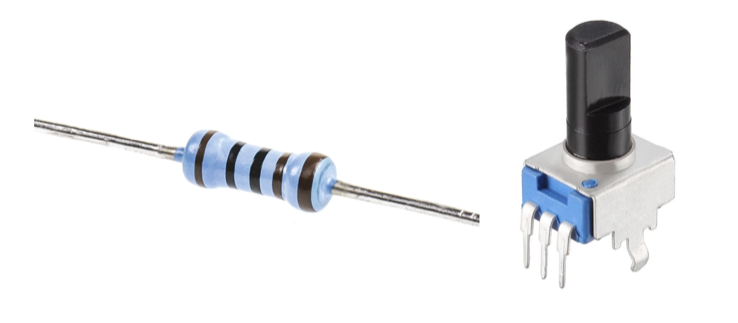
Figure 10. Fixed Resistor and Variable Resistor Comparison
Fixed resistors and variable resistors are selected based on whether a circuit requires a constant resistance value or adjustable control. A fixed resistor is used when the resistance is known in advance and does not need to change, which allows the circuit to operate with consistent and predictable behavior over time.
Variable resistors are chosen when adjustment is required during setup or use. They allow the resistance value to be changed to fine-tune circuit behavior or provide user control. In practice, fixed resistors suit designs intended for stable, long-term operation, while variable resistors are used where flexibility is necessary.
Conclusion
Fixed resistors are simple parts, but they play a big role in how electronic circuits behave. You’ve seen how they provide a steady resistance value that helps control current and manage voltage. Different types exist to handle different needs, from low-cost designs to high-power circuits. You also learned how symbols represent them in diagrams and where they are commonly used. By understanding how to choose the right fixed resistor, you can avoid common problems like overheating or unstable operation. With this knowledge, reading circuits and working with basic electronics becomes much easier and more confident.
Over ons
ALLELCO LIMITED
Lees verder
Quick Inviry
Stuur een aanvraag, we zullen onmiddellijk reageren.
Veel Gestelde Vragen [FAQ]
1. What does a fixed resistor do in a circuit?
A fixed resistor limits current or reduces voltage so other components can operate safely and predictably.
2. Why can’t a fixed resistor be adjusted?
Its resistance value is set during manufacturing and remains the same throughout normal use.
3. Where are fixed resistors commonly used?
They are used in current limiting, voltage division, signal control, and basic circuit protection.
4. How do you choose the right fixed resistor?
You look at the resistance value, power rating, tolerance, and the conditions where it will operate.
5. What is the difference between fixed and variable resistors?
Fixed resistors have one constant value, while variable resistors allow the resistance to be adjusted during use.
Elektronisch gecommuteerde motor (ECM): werking, typen en toepassingen
Op 2026/01/22
Krukaspositiesensorgids voor autobezitters
Op 2026/01/22
Populaire berichten
-
Complexe instructieset computers: hoe ze de computer hebben gewijzigd?
Op 8000/04/18 147757
-

USB-C-pinout en functies
Op 2000/04/18 111936
-
Met behulp van Xilinx Unified Simulation Primitives: een uitgebreide gids voor FPGA -ontwerp en simulatie
Op 1600/04/18 111349
-

Voedingsspanningen in elektronica: betekenis van VCC, VDD, VEE, VSS en GND
Op 0400/04/18 83721
-

RJ45 -connectorhandleiding: pinout, bedrading, kabeltypen en gebruik
Op 1970/01/1 79508
-

De ultieme gids voor draadkleurcodes in moderne elektrische systemen
De manier waarop onze elektrische systemen kleuren gebruiken, is niet alleen voor uiterlijk.Elke draadkleur geeft nu een specifieke functie aan, waardoor het gemakkelijker wordt om elektrische comp...Op 1970/01/1 66909
-
PURGE VLEP GIDS: Functie, symptomen, testen en vervanging voor optimale motorprestaties
De Purge -klep is een belangrijk onderdeel van het systeem van een auto dat helpt de lucht schoon te houden door brandstofdampen te beheren voordat ze in de atmosfeer kunnen ontsnappen.Dit helpt ni...Op 1970/01/1 63045
-

Kwaliteit (Q) Factor: vergelijkingen en toepassingen
De kwaliteitsfactor, of 'Q', is belangrijk bij het controleren hoe goed inductoren en resonatoren werken in elektronische systemen die radiofrequenties gebruiken (RF).'Q' meet hoe goed een circuit ...Op 1970/01/1 63012
-

Piekprestaties bereiken met de maximale stelling van de stroomoverdracht
De maximale stelling van de stroomoverdracht legt uit hoe energie van een bron, zoals een batterij of generator, naar een aangesloten belasting stroomt.Het toont de exacte voorwaarde waar de belast...Op 1970/01/1 54081
-
A23 Batterijspecificaties en compatibiliteit
De A23-batterij is een kleine, cilindervormige batterij met hoge spanning.Ook wel 23A, 23ae of MN21 genoemd, het loopt op 12 volt en veel hoger dan AA- of AAA -batterijen.Het speciale ontw...Op 1970/01/1 52126
Heet onderdeelnummer
-
LT8619IMSE#PBF
Analog Devices Inc.
IC REG BUCK 0.8V 1.2A 16MSOP
SN54LS173AJ
Texas Instruments
54LS173A 4-BIT D-TYPE REGISTERS
74AC109SC
Fairchild Semiconductor
IC FF JK TYPE DUAL 1BIT 16SOIC
V375C12E150BG
Vicor Corporation
DC DC CONVERTER 12V 150W
ADM8830ACP
Analog Devices Inc.
IC CHARGE PUMP REG TFT 20LFCSP
Z8F021APJ020SG
Zilog
IC MCU 8BIT 2KB FLASH 28DIP
SPC58EC80E1Q0C0X
STMicroelectronics
IC MCU 32BIT 4MB FLASH 64ETQFP
VE-2N2-CW
Vicor Corporation
DC DC CONVERTER 15V 100W
NZT902
onsemi
TRANS NPN 90V 3A SOT223-4
EDZVFHT2R16B
Rohm Semiconductor
DIODE ZENER 16V 150MW EMD2
ATMEGA329PV-10ANR
Atmel
IC MCU 8BIT 32KB FLASH 64TQFP
MM74HCT08MTCX
Fairchild Semiconductor
AND GATE, HCT SERIES, 4-FUNC, 2-
UC3853D
Texas Instruments
IC PFC CTR AVER CURR 94KHZ 8SOIC
MT46V8M16TG-75:D
Micron Technology Inc.
IC DRAM 128MBIT PARALLEL 66TSOP
DRV5015A1QDBZT
Texas Instruments
MAGNETIC SWITCH LATCH SOT23-3
TPS7A2430DBVR
Texas Instruments
IC REG LINEAR 3V 200MA SOT23-5
10118242-001RLF
Amphenol ICC (FCI)
CONN RCP MICRO HDMI 19POS SMD RA
NUF6402MNT1G
onsemi
FILTER RC(PI) 100 OHM/17PF SMD -
MAX923CPA+
Analog Devices Inc./Maxim Integrated
IC COMPARATOR 2 W/VOLT REF 8DIP
SL28506BZC-2
Skyworks Solutions Inc.
IC CLOCK CK505 PCIE GEN2 56TSSOP
LT1678CS8#TRPBF
Analog Devices Inc.
IC OPAMP GP 2 CIRCUIT 8SO
RHRG5060
NXP USA Inc.
RECTIFIER DIODE, AVALANCHE, 1 PH
TLC3704CN
Texas Instruments
IC COMPARATOR 4 GEN PUR 14DIP
W1524LC300
IXYS
DIODE GEN PURP 3KV 1524A W4
TPS2041BDBVR
Texas Instruments
IC PWR SWITCH N-CHAN 1:1 SOT23-5
VI-250-EY
Vicor Corporation
DC DC CONVERTER 5V 50W
RMPA0959
Fairchild Semiconductor
IC RF AMP CELL 824-849MHZ 11LCC
SMCJ16CA-E3/57T
Vishay General Semiconductor - Diodes Division
TVS DIODE 16VWM 26VC DO214AB
SN74CBT3125PWR
Texas Instruments
IC BUS SWITCH 1 X 1:1 14TSSOP
ACT412US-T
Active-Semi
IC OFF-LINE SWITCH PWM 6SOT-23
VNB14NV0413TR
STMicroelectronics
IC PWR DRIVER N-CHAN 1:1 D2PAK
C1608X7R2A102M/10
TDK Corporation
CAP CER 1000PF 100V X7R 0603
C2012JB1A685K085AC
TDK Corporation
CAP CER 6.8UF 10V JB 0805
EPM3128ATC100-5
Intel
IC CPLD 128MC 5NS 100TQFP
LTC2950ITS8-2#TRMPBF
Analog Devices Inc.
IC PB ON/OFF CONTROLLER TSOT23-8
BLM21BB221SN1D
Murata Electronics
FERRITE BEAD 220 OHM 0805 1LN -
THS6226AIRHBT
Texas Instruments
IC TELECOM INTERFACE 32VQFN
LV8481CS-TE-L-H
onsemi
IC MTR DRVR BIPLR 2.4-4.5V 10WLP
SSF2300
Good-Ark Semiconductor
MOSFET, N-CH, SINGLE, 4.5A, 20V,
CYPD2134-24LQXI
Infineon Technologies
IC MCU 32BIT 32KB FLASH 24QFN
SBR20A100CT
Diodes Incorporated
DIODE ARRAY SBR 100V 10A TO220AB
93LC46B-I/MS
Microchip Technology
IC EEPROM 1KBIT MICROWIRE 8MSOP
74HCT1G14GV,125
Nexperia USA Inc.
IC INVERT SCHMITT 1CH 1-IN SC74A
L78M09CDT-TR
STMicroelectronics
IC REG LINEAR 9V 500MA DPAK
HRPG-ASCA#13R
Broadcom Limited
ROTARY ENCODER OPTICAL 120PPR
IRFR9220TRPBF
Vishay Siliconix
MOSFET P-CH 200V 3.6A DPAK
ISL81487LIB
Intersil
IC TRANSCEIVER HALF 1/1 8SOIC
UPD78F0511AGB-GAF-AX
Renesas Electronics America Inc
IC MCU 8BIT 16KB FLASH 44LQFP
PCM1737E/2K
Texas Instruments
IC DAC/AUDIO 24BIT 200K 28SSOP
V24B15H200BG3
Vicor Corporation
DC DC CONVERTER 15V 200W
AB-13.560MANH-T
TXC CORPORATION
CRYSTAL 13.5600MHZ 15PF SMD
XC6220B281PR-G
Torex Semiconductor Ltd
IC REG LINEAR 2.8V 1A SOT89-5
KSZ9131RNXC
Microchip Technology
IC TXRX FULL/HALF 4/4 48QFN
12062C223MAT2A
KYOCERA AVX
CAP CER 0.022UF 200V X7R 1206